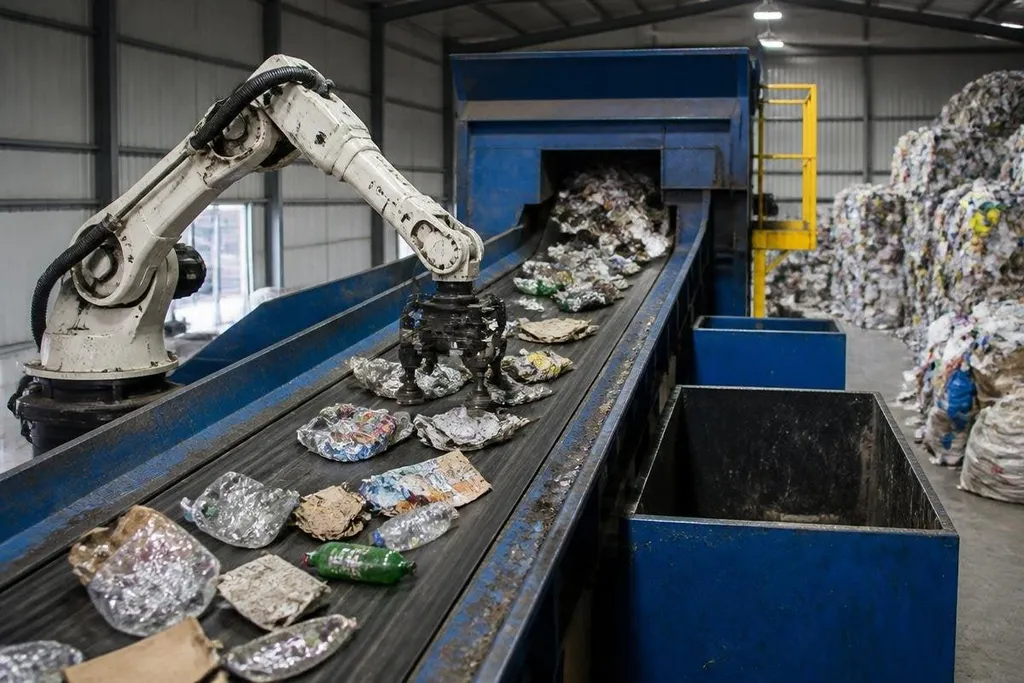
Waste management robots can sort materials, move containers, inspect sites, and handle work that puts people near sharp, dirty, or unstable waste. Their value depends on how steady the task is and how well the work area is controlled.
Quick read
- Robots can take on repeated sorting, transport, and inspection work.
- Sensors can misread wet, crushed, blocked, or contaminated material.
- A useful trial starts with one narrow task and clear safety checks.
Where robots can help
The machine works best when the task repeats in the same area. Sorting lines, container movement, floor inspection, and scheduled collection all have steps that a machine can repeat after setup.
That repeat work can reduce the time people spend near broken glass, medical waste, dust, sharp metal, or unstable piles. The benefit depends on the robot’s tools and sensors, so a machine built for container movement may have little use on a mixed sorting line.
Robots can also gather data during work. A camera may record blocked paths, fill levels, or damaged containers, while other sensors can help the system detect objects and avoid contact. The data only helps if staff can review it and act on what it shows.
The machine can keep working through a planned shift, but it still needs charging, cleaning, checks, and repairs. Those tasks move work from the waste area to the control and maintenance team rather than removing the work altogether.
The limits in real waste streams
Waste rarely arrives in a neat form. Bags can hide objects, liquids can cover labels, and crushed items can look different from the examples used to set up a vision system.
The machine may sort a clean item well and fail when the same item is wet or partly buried. That error has a cost. A useful item sent to the wrong stream lowers recovery, while a dangerous object sent to the wrong place can harm equipment or people.
Human checks still matter where the material changes often or where one mistake has serious consequences. Movement creates another problem. A system that works beside people needs a clear route, a way to stop, and a response when someone enters its path.
Floor changes, loose waste, poor lighting, and blocked access can affect the system even when its software works as planned.
Mixed waste changes the case for automation: a sorter that works on clean material may need more staff when bags arrive wet or tangled. Robot24.com can tie reports to the waste stream, robot model, test site, and date, so you can judge the claim before weighing people, cost, and upkeep.
People, cost, and upkeep
Waste robots can change a worker’s job. A person may spend less time lifting or sorting by hand and more time checking the system, clearing jams, inspecting material, or fixing equipment. That shift needs training and a clear plan for manual work when the robot stops.
The purchase price is only one part of the cost. A site also needs mounting or floor space, power, software support, spare parts, cleaning time, and staff who can respond to faults. A robot that works for one task but blocks access to another may add work instead of cutting it.
The evidence for a purchase should come from the site itself. Measure the task before installation, record errors during a controlled trial, and compare the result with the current manual process. Claims about faster sorting or lower staffing needs need figures from the same type of waste and work area.
A practical decision guide
Before a trial, check these points:
- Pick one task: choose work with a fixed route, clear start point, and repeatable steps.
- Test the waste: include wet bags, damaged items, blocked views, and material that changes by shift.
- Set a human handoff: name who stops the robot, clears a jam, and checks a doubtful item.
- Measure the result: record useful output, sorting errors, stoppage time, cleaning, and repair work.
- Plan the site: mark routes, access points, charging space, emergency stops, and areas for manual work.
The best first use is usually a controlled task where people face avoidable exposure and the material stays fairly consistent. I’d skip a broad rollout until a site has measured error rates, downtime, and the extra work needed to keep the robot running.
That measurement should decide the next step: expand the trial, change the task, or leave the work manual until the robot can handle the waste in front of it.